Smoke alarm manufacturing
Compare photoelectric smoke alarms and combined smoke-and-heat options.
Read guide →HEAT DETECTOR MANUFACTURER
Choose heat detection by application, operating environment, alarm method, power supply and connectivity instead of treating one detector as suitable for every room.
Compare photoelectric smoke alarms and combined smoke-and-heat options.
Read guide →Review environmental risks, detector choice, ceiling conditions and notification.
Read guide →Confirm branding, manual, packaging and production requirements.
Read guide →PUBLISHED MODELS
Open a model page for its current application, certification and OEM/ODM notes.
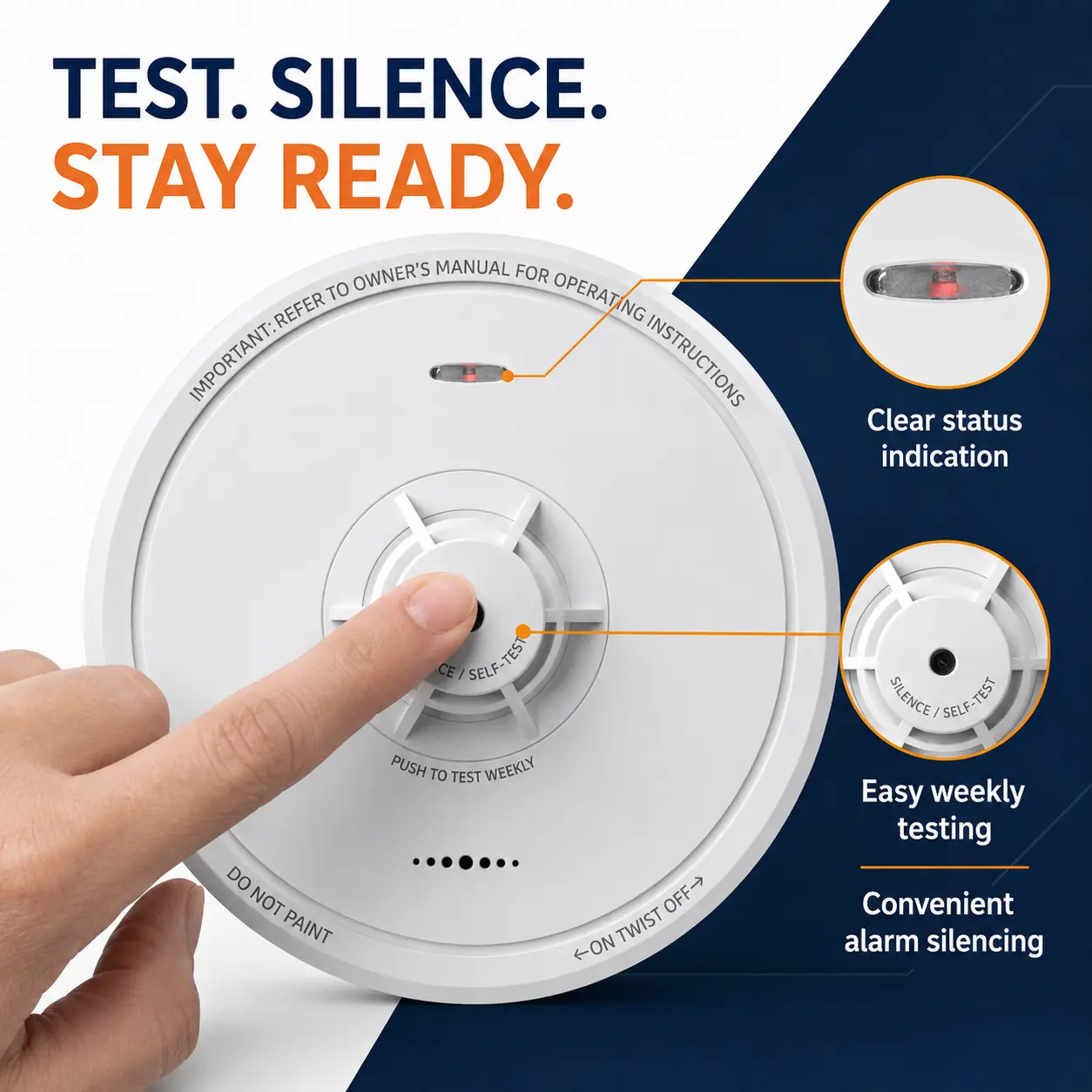
PS-828 heat detection and warning product for locations where temperature-based fire detection is selected after an environmental review, available for distributor, project and OEM requirement review.
View model →BUYER QUESTION
Selected models include standalone heat alarms, sealed long-life battery designs, connected heat alarms and smoke-and-heat combination devices.
BUYER QUESTION
Temperature profile, dust, steam, airflow, ceiling height and nuisance-alarm risk should be reviewed before selecting smoke, heat or combined detection.
BUYER QUESTION
Confirm local audible warning, visual indication, interconnection, app notification or panel reporting requirements for the intended project.
BUYER QUESTION
Specify battery or mains power, expected service life, low-battery indication, test method and replacement responsibility.
BUYER QUESTION
Private-label options may cover logo, product label, packaging and multilingual instructions, subject to technical and order confirmation.
BUYER QUESTION
Operating thresholds, standards and certificates must be checked against the exact model and destination market.
BUYER FAQ
Heat detection may be considered where dust, steam or normal airborne particles make smoke detection unsuitable. Final selection and placement must follow local requirements.
Yes, selected models use sealed long-life batteries. Confirm the rated service life and technical documents for the exact product.
Selected connected models may support app functions. Confirm Wi-Fi requirements, platform, regional availability and offline behaviour by model.
Branding, labels, packaging and manuals can be discussed according to the model, quantity and market requirements.
Send the application, target market, quantity, alarm and connectivity requirements, certification needs, packaging and delivery schedule.
NEXT STEP
MIRO will review product fit, system compatibility, documentation and customisation requirements before quotation.
Request a Project Review